
01The sign
1400 years ago nobody knew that stars and planets wobble around their barycenter however it was portrayed in the Quran.
02Scientific evidence
"What Is a Barycenter? We say that planets orbit stars, but that’s not the whole truth. Planets and stars actually orbit around their common center of mass. This common center of mass is called the barycenter. Barycenters also help astronomers search for planets beyond our solar system... If a star has planets, the star orbits around a barycenter that is not at its very center. This causes the star to look like it’s wobbling."
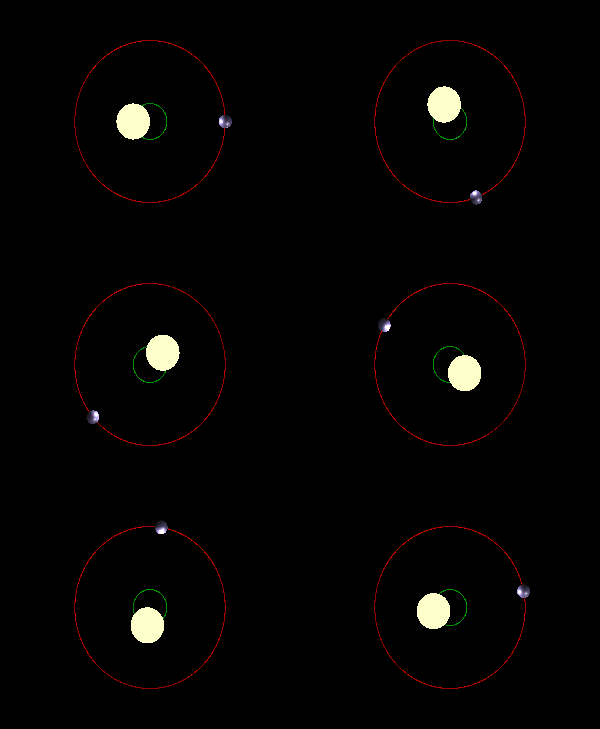
As seen from above, a large planet and a star orbit their shared center of mass, or barycenter.
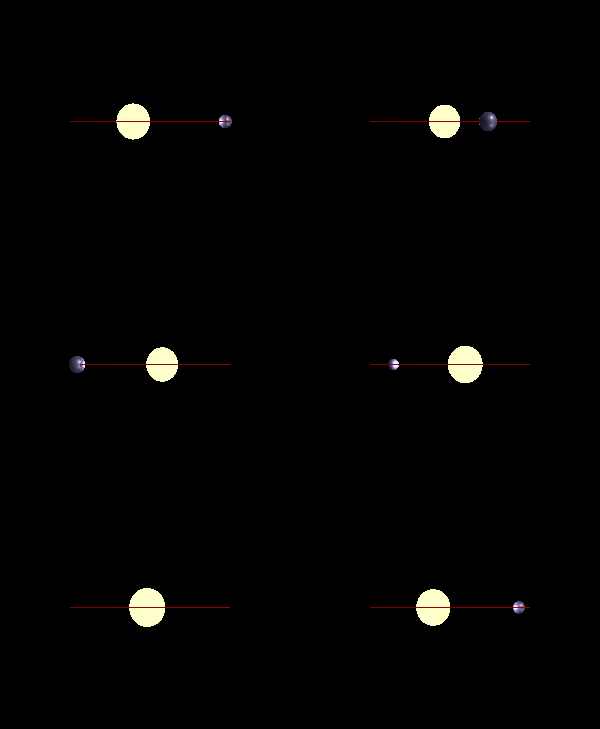
As seen from the side, a large planet and a star orbit their shared center of mass, or barycenter. The slightly off-center barycenter is what makes the star appear to wobble back and forth.
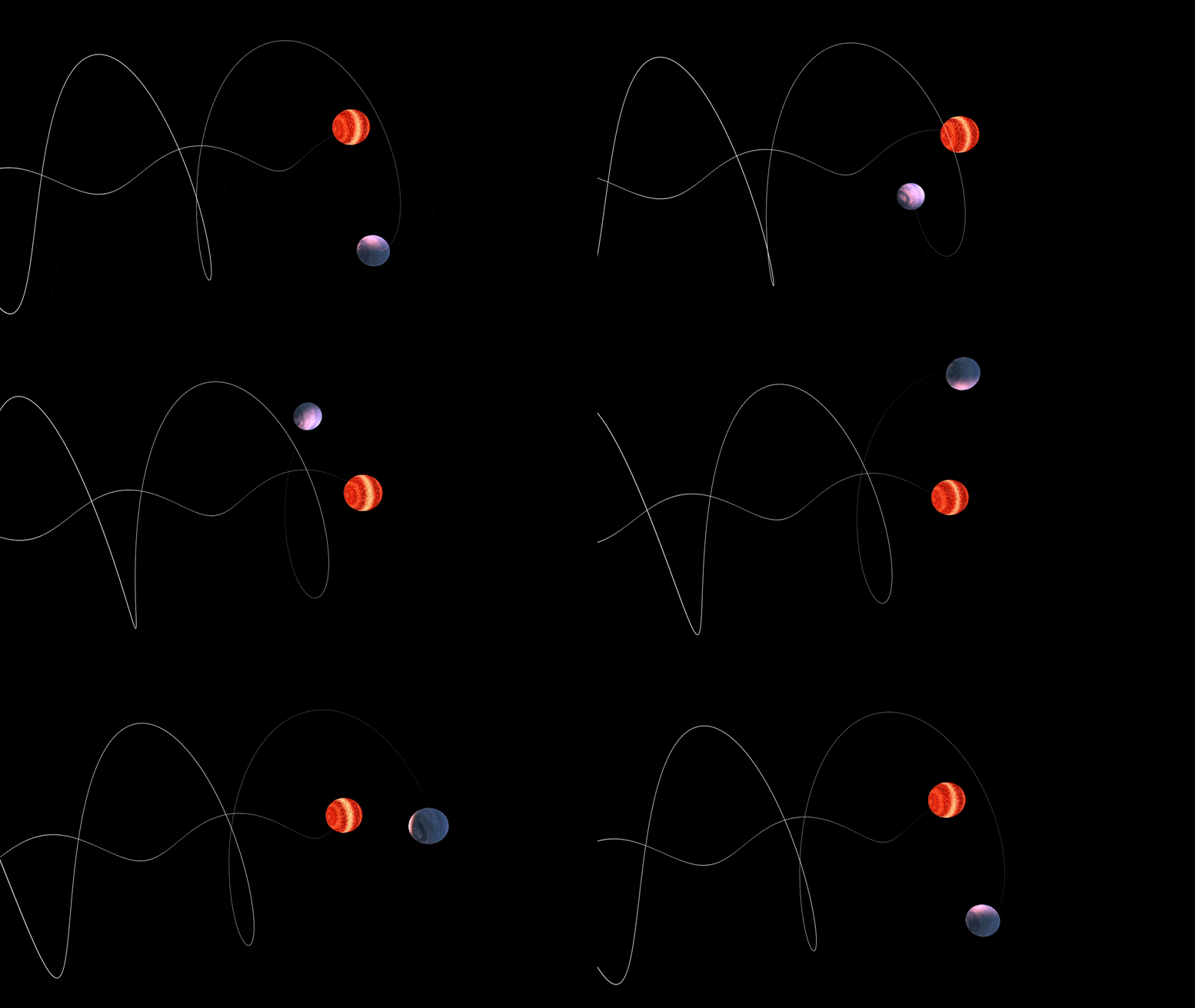
As seen by a distant observer, the barycenter travels in a straight line however stars and orbiting planets travel in a spiral. This was only known recently; however this was portrayed in the Quran 1400 years before it was discovered. While describing the motion of the sun it says that it is similar to someone running.
03Qur'an passage · Quran 36:38
وَالشَّمْسُ تَجْرِي لِمُسْتَقَرٍّ لَهَا ۚ ذَٰلِكَ تَقْدِيرُ الْعَزِيزِ الْعَلِيمِ ٣٨
And the sun runs towards its destination. Such is the design of the Almighty, the All-Knowing.
04Reflection
The word "Tajree تَجْرِي" means run. Today we know why the Quran used this word, because when you run distant observers see also a vertical component to your motion. Today we know that this also is true for stars and planets; distant observers see a vertical component to their motion. No mistakes in the Quran.
Additional references
Original article: Miracles of Quran. The scientific excerpts retain their original NASA credit. The first two star animations come from NASA Space Place; the third is reproduced from the original article. The following summaries and Quran context are separate additions.
Additional evidence — summary
A star and a planet pull on each other and orbit their shared centre of mass. NASA Space Place illustrates this with the Sun and Jupiter: their shared centre lies just outside the Sun’s surface. The animations are simplified diagrams. A spiral track depends on how the system moves relative to the chosen viewpoint; it is not a universal path seen by every distant observer.
Additional evidence — summary
The NASA–NSF NEID instrument uses the radial-velocity method: it measures small changes in a star’s motion toward and away from us caused by an orbiting planet’s pull. This is a practical research use of stellar wobble in finding and studying planets.
Additional evidence — summary
وَكُلّٞ فِي فَلَكٖ يَسۡبَحُونَ
Meaning of the closing excerpt from 36:40: “Each moves along in an orbit.” The surrounding verse discusses the sun, moon, night and day. This supplies Quranic context for orderly celestial motion.
Additional evidence — summary
Ibn Kathir discusses the sun’s appointed course and time in explaining 36:38. Connecting “tajri” specifically to motion around a shared centre of mass is a modern interpretation, not an explicit statement of that mechanism in the verse. The science supports stellar wobble; it does not prove that interpretation or the original article’s claim about who first knew it.
05 · Ponder